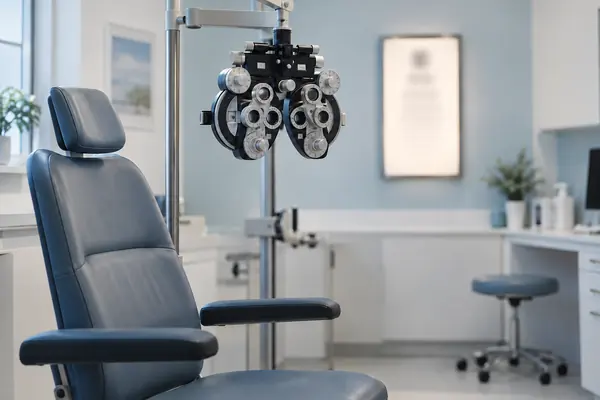
EYE TESTS
Every two years
The NHS recommends an eye test every 2 years, or more often if your optometrist advises. Tests look for conditions such as glaucoma, macular degeneration and cataracts.
Check your situation doodleeye
00WHAT THE GUIDANCE SAYS
A test can spot what you cannot feel.
The NHS recommends an eye test every 2 years, because eyes rarely hurt when something is wrong. Add a few screen breaks and know the handful of signs that need an urgent appointment.
Check your situation01Principles
02THE SHORT ANSWER
Most eye care is routine.
A few changes are not, and need a quick appointment.
EYE TESTS
The NHS recommends an eye test every 2 years, or more often if your optometrist advises. Tests look for conditions such as glaucoma, macular degeneration and cataracts.
Check your situationSCREENS
The College of Optometrists says there is no evidence screens harm your eyes, though long spells can be tiring. Look up and into the distance now and then.
Habits to tryWARNING SIGNS
Flashes or floaters that appear suddenly, or a dark curtain across your vision, need an urgent optician appointment.
See the numbersGeneral information only, not medical advice. For advice about your own health, speak to a doctor, pharmacist or other qualified health professional.
03A QUICK EYE CHECK
Pick the situation closest to yours to see what UK guidance suggests. The bar shows how soon to act.
Based on NHS, College of Optometrists, HSE and nidirect guidance. This is general information, not personal medical advice.
04TWO NUMBERS WORTH KNOWING
One figure on how often to get checked,
one on how much sight loss goes unaddressed.
2 years
Recommended gap between eye tests
The NHS recommends having your eyes tested every 2 years, and more often if your optometrist advises it. It notes that your eyes rarely hurt when something is wrong with them.
HOW OFTEN · NHS
≥ 1 billion
People whose sight problem was preventable or is still unaddressed
The World Health Organization says at least 2.2 billion people have a near or distance vision impairment, and for at least 1 billion of them it could have been prevented or is yet to be addressed.
WORLDWIDE · WHO
The WHO fact sheet (February 2026) names refractive errors and cataracts as the leading causes of vision impairment and blindness. Both are things a routine eye test looks for.
05FOUR HABITS TO TRY
None of these takes long. Most are about booking things on time and knowing when not to wait.
Every 2 years, or sooner if your optometrist says so. Note the date of your last one.
Under 16s, people 60 or over, and people with diabetes or glaucoma are among those entitled to a free NHS sight test.
Every 20 minutes, look at something about 20 feet away for about 20 seconds, and keep reflections off the screen.
Sudden flashes or floaters, or a shadow moving across your vision, mean an urgent optician appointment.

06WHAT A TEST CHECKS
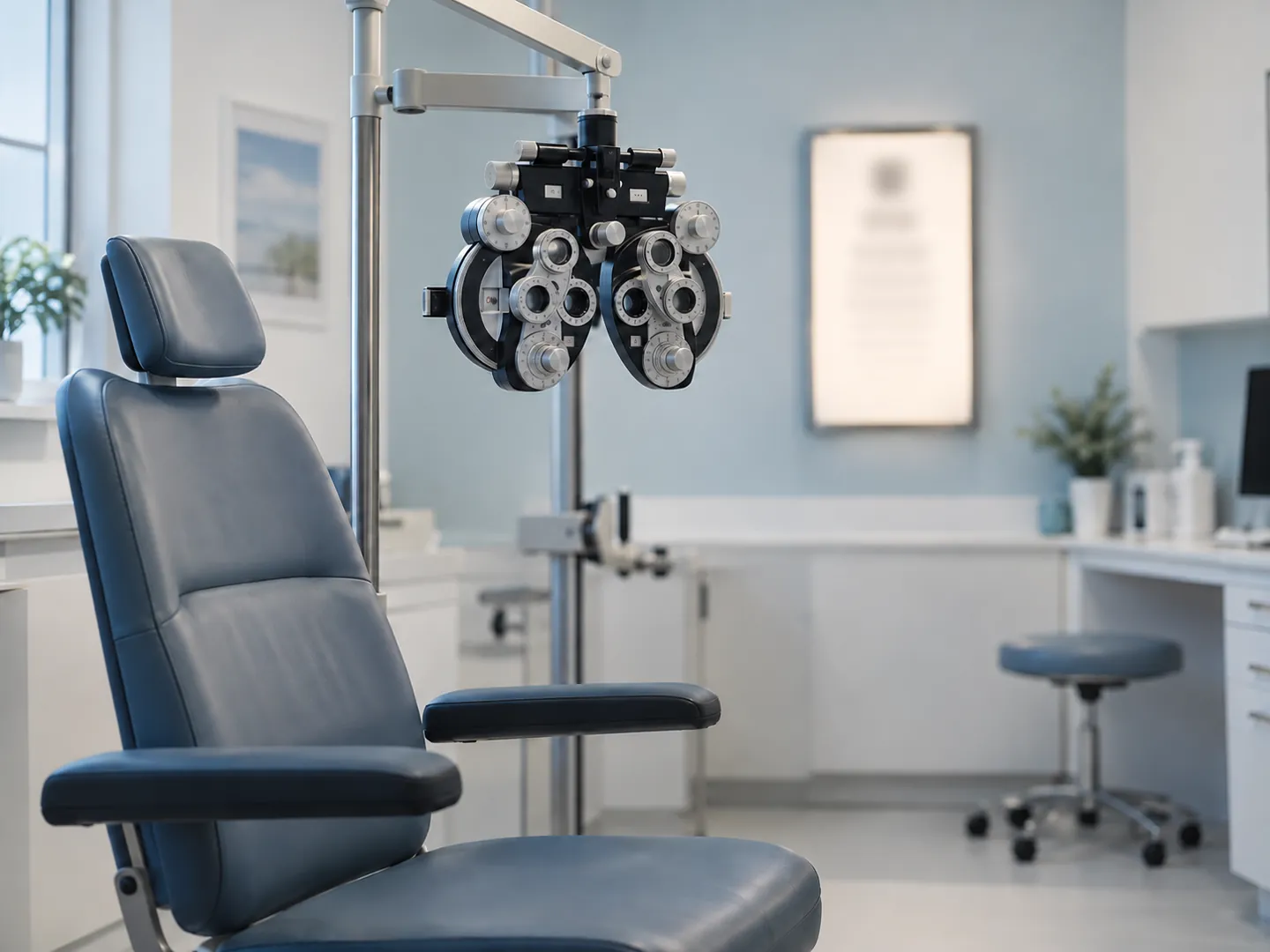
An eye test is done by an optometrist or ophthalmic practitioner trained to spot abnormalities. As well as your prescription, they look for conditions such as glaucoma, macular degeneration and cataracts, and may test focusing, eye coordination, depth and colour vision.
If something needs a closer look, they can refer you to your GP or a hospital eye clinic. You leave with your prescription or a referral statement. Some people find they need glasses just for screen work, even if they do not need them otherwise.
07Questions
The NHS recommends every 2 years. Your optometrist may advise more frequent checks, and if you are entitled to a free NHS test you can have one more often when they recommend it.
The College of Optometrists says there is no evidence that looking at screens harms your eyes, and HSE says screen work does not cause permanent damage. Long spells can still bring tired eyes, discomfort and headaches.
It is a screen-break habit suggested by the College of Optometrists: every 20 minutes, look at something about 20 feet away for about 20 seconds.
Among others: under 16s, 16 to 18 year olds in full-time education, people aged 60 or over, people with diabetes or glaucoma, people 40 or over with a close relative with glaucoma, and people on certain benefits.
nidirect advises an urgent optician appointment if flashes or floaters appear suddenly or increase, you see a dark curtain or shadow, or they come with blurred vision, eye pain, eye surgery or an eye injury.
08Sources
ABOUT THIS NAME
doodleeye.com is part of the DoodleSale portfolio. It isn't in an auction right now, but you can ask about leasing it.